Why Start a Chapter? What Founding a Fraternity or Sorority Gives You

Rush Members
Thinking about bringing a fraternity or sorority to your campus? Here's what founding a chapter gets you, and how to start.
Maybe your campus has no Greek life, or it has a few chapters and none of them fit you. Or maybe you watched friends at another school find their people in a chapter, and you want the same thing where you are.
Starting a chapter is called expansion or extension, depending on the organization. Every chapter that exists today began with a handful of students who decided to go first.
What membership does for people, by the numbers
In 2021, the North American Interfraternity Conference (NIC) and the National Panhellenic Conference (NPC) commissioned Gallup to survey more than 10,000 college graduates. Fraternity and sorority alumni found jobs faster: 51% were working within two months of graduation, compared with 36% of graduates who didn't join. They were more likely to have had both a professor who cared about them and a mentor who encouraged them (23% versus 14%), and three times as likely to have done an internship or other experiential learning (24% versus 8%). Asked whether they would join again, 84% said yes.
Those numbers come from members of established chapters. Founders are members too, and they also get a few things nobody who joins later can have.
Why founding is different from joining
You set the culture on day one
Members of an established chapter inherit its traditions and reputation. Founders decide them: which values the chapter takes seriously, how new members are treated, what a meeting feels like, whether study hours are enforced. Those early decisions tend to stick long after the founders graduate.
Campuses and national organizations are watching hazing closely right now. A chapter that starts without a hazing tradition never has to unlearn one.
You lead sooner
In an established chapter, you might wait two or three years to hold a major office. In a founding class, you could be writing bylaws, running recruitment, managing a budget, and presenting to university staff and national officers in your first year, which gives you plenty to talk about in job interviews.
You choose the people
Founding members recruit each other. You build the group around values you share and invite people you'd want to spend the next four years with.
Your name goes on the charter
When the group earns its charter, the founding members are recorded as the chapter's founders. Every member who comes after you joins something you built, and many founders stay involved as alumni and advisors long after graduation.
You start with a national network behind you
A new chapter of a national organization comes with its alumni network, leadership conferences, scholarships, and staff whose job is helping new groups get established.
The hard parts
Founding a chapter is a lot of work, and the people who succeed expect that going in. Recruiting a founding class, meeting your organization's requirements, and running a new group will take hours every week on top of classes.
It also takes patience. Delta Tau Delta, for example, says its student-started groups usually take one to two years to charter after becoming a colony. It asks for at least 20 men before a group can become a colony, and it wants founders with GPAs above 3.0. Other organizations set their own minimums.
You'll also start without older members to ask how things work, and without a reputation to recruit on. Early on, students will judge the chapter by the founders they meet.
How to get started
Every organization and campus has its own rules, and sororities follow a different path from fraternities.
1. Find out what your campus allows
Start with your fraternity and sorority life office, or student activities if there isn't one. Ask whether the school is open to new chapters, what its expansion policy is, and whether a governing council has to approve new groups. Some schools only add chapters on a set schedule.
2. Know which path you're on
NIC fraternities usually grow in one of two ways. In staff-led expansion, the national organization picks a campus and recruits the founding class itself. With a student-led interest group, students organize on their own and then apply to become a colony (some organizations call it an associate or provisional chapter). Many fraternities have a start-a-chapter form on their website.
Adding an NPC sorority is called extension, and the campus runs it. If your school has a Panhellenic Council, the council decides whether to add a chapter, hears presentations from interested organizations, and votes on which one to invite. Talk to your campus Panhellenic advisor, and contact the NPC at npccentral@npcwomen.org.
Member organizations of NPHC, NALFO, NAPA, and NMGC each run their own expansion process, so contact the organization's national office directly.
3. Build an interest list
National organizations and campuses want proof that students are interested. Collect names, emails, class years, and majors from anyone who would join, and collect more than you need, since interest usually drops once meetings start.
4. Find an advisor
A faculty or staff advisor who believes in the group makes every conversation with the university easier. Local alumni of the organization are worth finding too, and the national office can often connect you with them.
5. Contact the national organization
Email the organization's expansion or growth team with your campus, your interest list, and what you learned about your school's policy. Ask about their colony requirements, the support they provide, and how long chartering usually takes.
Build the chapter to outlast you
The groups that charter and stay healthy tend to run like established organizations from the start. They have clear officer roles and written records, they collect dues on time and track attendance, and they recruit the same way every semester. Founding classes graduate, and the chapter survives only if the next class can pick up where they left off.
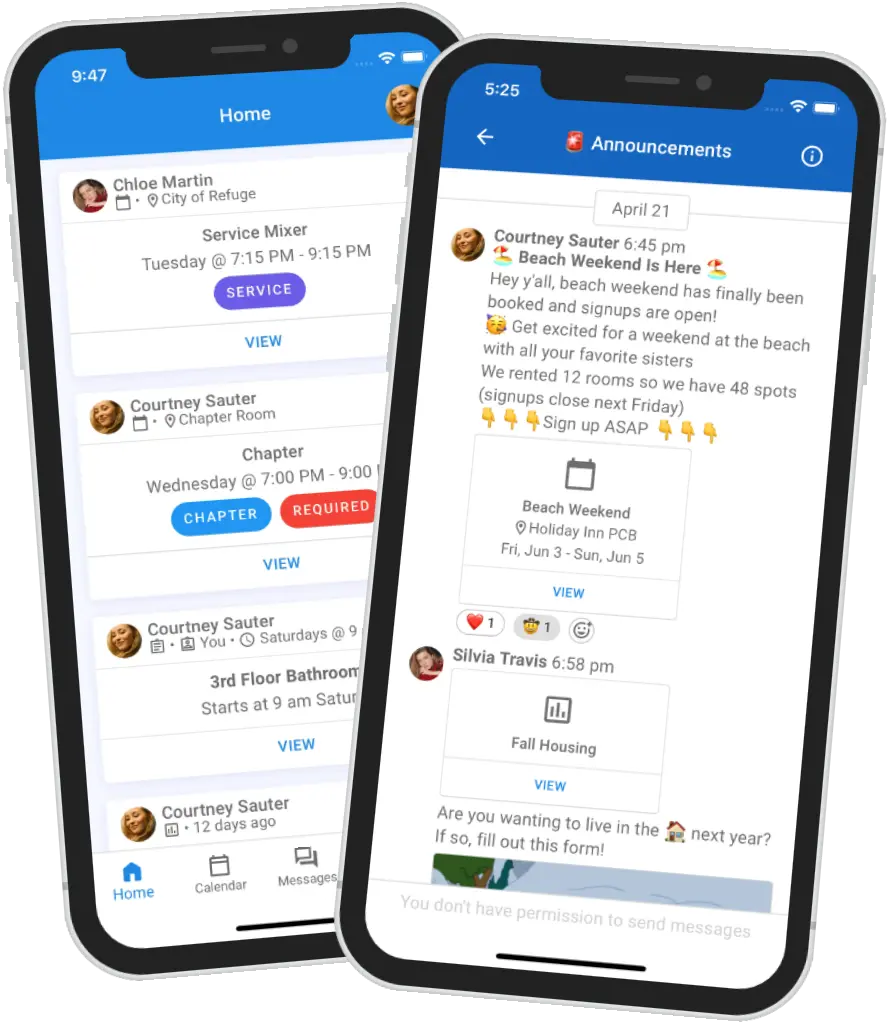
Greek Connect is built for that. You can track every interested student through recruitment, keep a member directory, run your calendar and check-ins, collect dues, and store documents that stay with the chapter when officers change. If you set it up while you're still an interest group, your chapter's records start on day one.
If you're ready to start, email your fraternity and sorority life office this week and ask about its expansion policy.
Starting a Chapter? Get Organized From Day One
Track your founding class, run recruitment, and keep records that outlast your officers. See how Greek Connect helps new chapters get off the ground.